

Quantum is a Competition, Not a Race: Why the Mountain West controls the bottlenecks that will determine whether quantum works
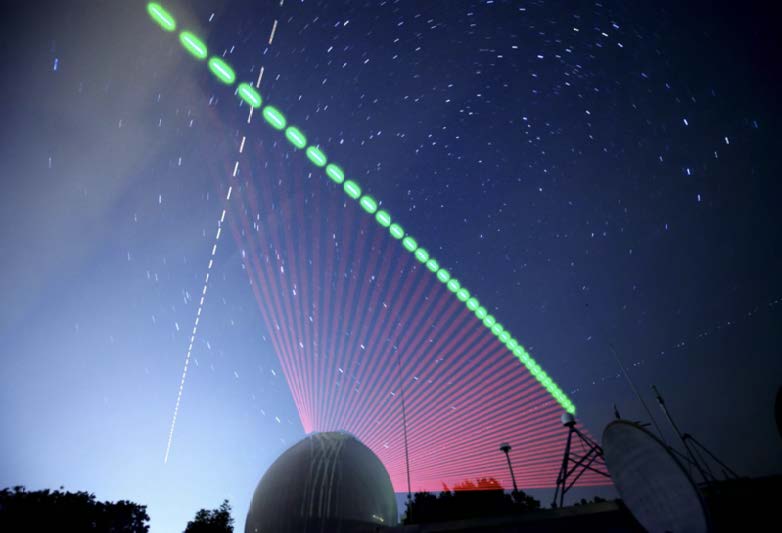
ASCEND technologies sit closest to quantum, where real-world sensing matters most. - The Quantum Frontier: Platforms, power, and pathways to innovation impact in the Mountain West, produced by Denizens LLC
Quantum development is often characterized as a race; who files the most patents, who builds the bigger quantum computer, who gets there first. It's a compelling narrative, but it is also a misleading frame of reference. Understanding the importance of this distinction is essential for anyone trying to make sense of where quantum technology is heading and what role places like the Mountain West are positioned to play.
A research report commissioned by Innosphere, and which informs the NSF ASCEND Engine's strategic direction, recognized that global quantum competition is real and intensifying. But the countries that will shape the field aren't simply the ones producing the most patents or building the biggest computers. They're the ones that control the bottlenecks - the critical layers of the technology stack where quantum systems either become trusted and deployable or stall out and fail.
Different Approaches and Advantages
China and the United States are competing aggressively in quantum, but they're doing it differently. China has built its position around state-directed investment, rapid deployment of specific architectures, and early commitment to infrastructure rollout. It now leads the world in total volume of quantum inventions. The U.S. approach is more decentralized and diverse, it collaboratively develops technologies through universities, national laboratories, venture-backed startups, and across allied nations.
These differences produce different kinds of advantages at different points in the system. China is stronger where speed, manufacturing coordination, and early deployment matter most. The U.S. and its allies (including the Netherlands, Finland, Denmark, and Australia) are stronger in what the report calls the "enabling layers": photonics, precision measurement, control electronics, calibration, systems integration, and standards-setting. These enabling layers, which cannot be bypassed by advancing quantum technologies, include the innovations that will determine whether quantum technology actually works outside a lab.
The race framing obscures this. While China may lead in raw patent numbers, the ultimate utility of these technologies, and if they will ever be applied in real-world situations, still depend on capabilities developed elsewhere.
Why Stack Position Matters More than Patent Count
Quantum technologies don't move from lab to market as single finished products. They emerge through layered stacks of components, platforms, and workflows: devices paired with optics, control electronics, software, calibration routines, validation infrastructure, and real-world operating environments. Progress at one layer depends on the maturity of the layers below it.
The layers that most often determine whether a quantum system succeeds or fails in deployment are measurement, photonics, calibration, validation, and systems integration. These are the same layers concentrated in the Mountain West. On an employment-normalized basis, the Mountain West region's quantum invention intensity in photonics runs at 4.53 times the U.S. average. The region similarly dominates in lasers (4.51 times the national average). quantum gyroscopes (8.86 times the national average), and single-photon detectors, magnetometry, and optics are all well above 3 times the national average.
These aren't abstract upstream specialties. They're gatekeeper technologies. The parts of the stack where quantum systems either prove themselves or break down under real-world conditions.
The Mountain West's Role in a Contested Global System
The Mountain West is at the intersection of quantum technologies essential for commercializing the broader quantum stack. Elevate Quantum, a first-of-its-kind designated TechHub by the U.S. Department of Commerce’s Economic Development Administration, is dedicated specifically to accelerating the commercialization of quantum technologies and building the U.S. quantum economy. NIST and JILA in Boulder anchor the country's deepest precision-measurement and metrology infrastructure. The Sandia and Los Alamos Labs anchor mission-oriented engineering, qualification, and hardening in New Mexico. These institutions define what "trusted performance" means for quantum systems, and they shape the standards and qualification pathways that the rest of the field will be required to meet.
The Mountain West's goal isn't to out-scale other continental regions. It's to become the place where quantum systems are stabilized, measured, qualified, and connected to real use. It is to build and control the infrastructure that makes quantum systems trustworthy. In a global competition shaped by bottlenecks, that kind of position is worth more than headline patent counts suggest.
Learn more by reading the full report, "The Quantum Frontier: Platforms, power, and pathways to innovation impact in the Mountain West", produced by Denezins LLC, a study commissioned by Innosphere and generously supported by Colorado's Office of Economic Development and International Trade (OEDIT).