

O2matic Seeks to Bring Clinically Proven, Autonomous Oxygen Therapy to the US Market
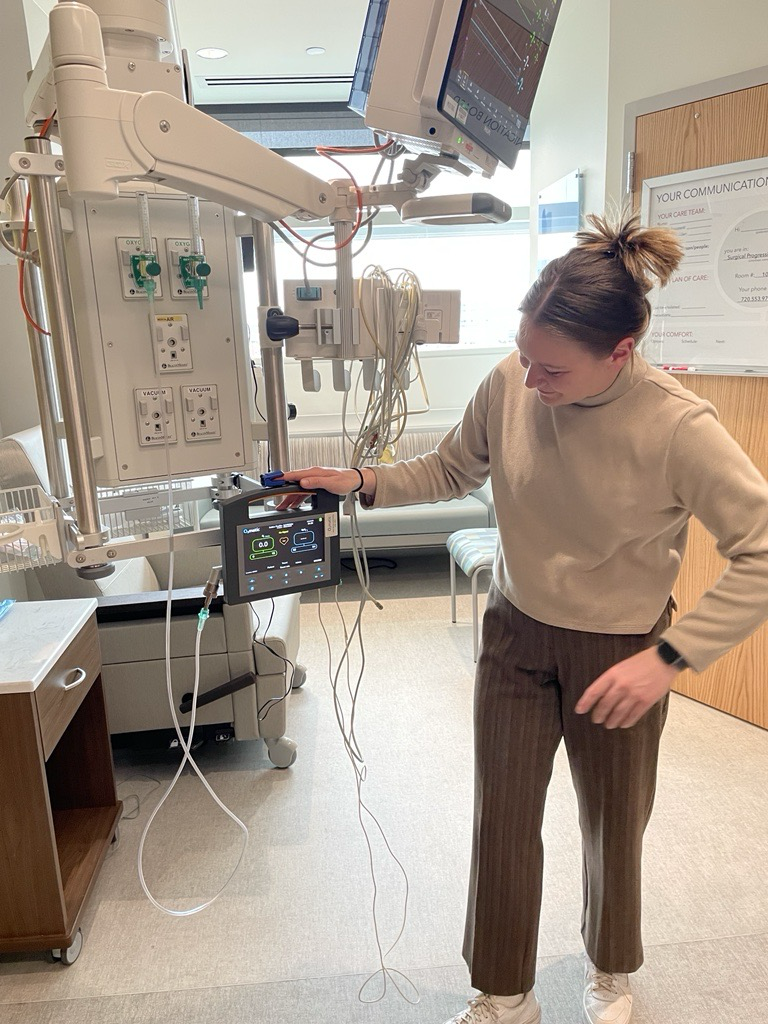
“I'm driven by the idea of helping people and I think relieving breathlessness, optimizing therapy, and providing safer and more efficient oxygen therapy across the full patient journey, is just closing the loop.” - Anja Rode Lave
O2matic is having a good month. The Copenhagen-based medtech company, along with the University of Colorado Anschutz, just announced the results of a clinical trial demonstrating that O2matic’s autonomous oxygen therapy system is superior to manually titrating oxygen levels. The trail proved that the O2matic Pro, which is designed for hospital use, kept patients within their target oxygen range far more consistently than standard manual care. This is a significant milestone, and the timing could be better as O2matic works to bring its technology to the United States.
The Technology
Oxygen is one of the most common treatments in hospital and emergency medicine, but it's still managed largely by hand. Nurses and respiratory therapists check a patient's blood oxygen periodically and adjust flow accordingly, often only catching problems after they have occurred.
Head of O2matic’s Clinical and Product Management, Anja Rode Lave, is a former ICU nurse, “I know from my own experience how much time you actually spend on manually titrating oxygen,” she says. “That's why it's so great to see this trial coming out proving that what we have already shown in less critical care settings: with an O2matic, patients spend more time within the oxygen target range set by the clinician and use less oxygen than patients receiving manually titrated oxygen.”
O2matic's flagship device, the O2matic PRO100, continuously monitors a patient's blood oxygen saturation (SpO₂) and automatically titrates oxygen flow in real time to keep the patient within a clinician-set target range, alerting staff only when a patient needs more serious intervention. A companion product, the O2matic HOT100, brings similar automated oxygen management into home care.
The PRO device was brought to market in 2019, targeting respiratory departments and COPD patients. Commercially available across Europe, the device became the standard of care for patients during the COVID-19 pandemic.
O2matic’s short-term goals are to gain FDA certification and bring their products to US markets.
The Trial Results
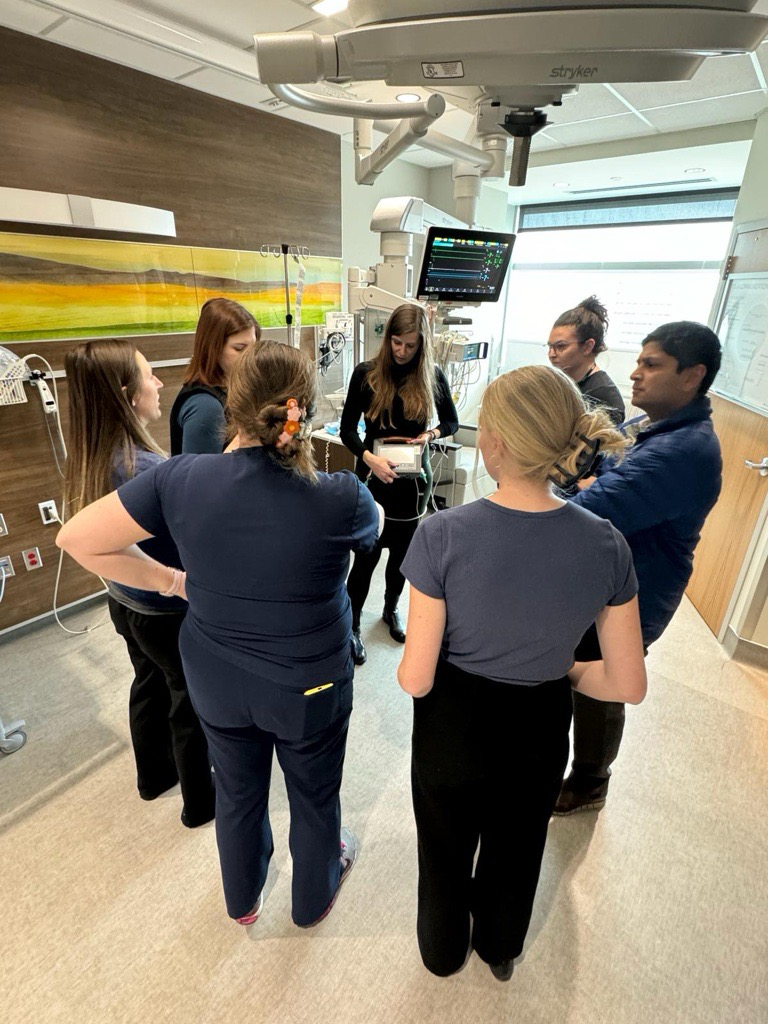
This goal got a little bit closer on August 3, when O2matic and the University of Colorado - Anschutz School of Medicine announced the results from the SAVE-O2 AI trial, a randomized, multicenter study of 300 hospitalized adults across four U.S. hospitals: UCHealth University of Colorado Hospital, Vanderbilt University Medical Center, Oregon Health & Science University, and Wake Forest University School of Medicine.
ICU Patients whose oxygen was managed with the O2matic PRO100 spent 85% of their time within the prescribed oxygen range, compared with 63% for patients on standard, clinician-managed oxygen therapy, a 35% relative improvement. Patients also spent 45% less time in dangerously low oxygen levels, 68% less time in excessively high oxygen levels, and used about 23% less supplemental oxygen overall, all without any increase in serious adverse events. The findings were published in JAMA Internal Medicine and presented at the Military Health System Research Symposium.
"I think if we can help the patient to feel better and get better faster, and at the same time relieve some of the work required of staff, then we are doing a great job," says Rode Lave.
From Europe to the US
O2matic joined Innosphere's Life Sciences Accelerator to help chart its path into the US market, and the timing of these trial results couldn't be better.
Marie-Louise Little, the company’s CEO, said that “the US market has already shown strong interest in our solutions among patient organizations, clinicians, and military healthcare providers. We were particularly honored that the renowned team at CU Anschutz approached us to evaluate our technology. Their clinical expertise and commitment to innovation make them an ideal partner, and opportunities to collaborate with an institution of this caliber are exceptionally rare”
The SAVE-O2 AI trial is just the first phase of a larger research partnership with CU Anschutz. The next stage, a two-year program called AURORA, will evaluate O2matic's technology in ambulances, medical helicopters, and military settings, environments where clinicians have even less time and attention to spare for manual oxygen adjustments.
The company is now working toward FDA approval while raising a $6 to $10 million Series A round to fund the company’s expansion into the United States and support the FDA approval process.
What's Next
With strong US trial data in hand and an FDA strategy taking shape, O2matic is exactly the kind of company Innosphere's Life Sciences Accelerator is built to support. They have proven technology, a clear regulatory path, and a growing case for why precision oxygen therapy is ready for the US market.
Kevin Noble, Director of the Life Science Accelerator, noted that “O2matic found us through the University of Colorado - Anschutz, not the other way around, which speaks to the strength of that research relationship. Once they were in our program, our focus shifted to the venture development work: helping them build a fundable Series A story and a credible FDA pathway.”
Both Little and Rode Lave credit their positive experience with the accelerator thus far to their fellow cohort members. O2matic says one of the most valuable parts of the accelerator has been learning directly from other life sciences companies at the same stage of growth.
O2matic is currently engaging with prospective investors for its Series A round. Investors interested in learning more are welcome to connect directly with Marie-Louise Little, CEO, at mll@o2matic.com.