

Colorado-Wyoming Tech Employment Is Outpacing the Nation
.jpg)
The headline finding - that tech employment in CO-WY grew by roughly 61% over that 15-year period - is striking. This rapid expansion outpaced the national growth rate of 45%, placing the region firmly in the upper half of comparable technology markets nationwide.
A new report from the Business Research Division at the University of Colorado Boulder's Leeds School of Business confirms that the Colorado-Wyoming technology ecosystem is growing faster than the national average. Replicating a Brookings methodology, the report finds that the industries experiencing the fastest growth, both nationally and in the CO-WY region, heavily overlap with quantum technology, remote sensing, and advanced manufacturing, all key areas at the heart of the NSF ASCEND Engine.
The Tech Employment Analysis, commissioned by Innosphere and released in July 2026, provides a comprehensive look at technology employment trends across the CO-WY region from 2010 to 2025.
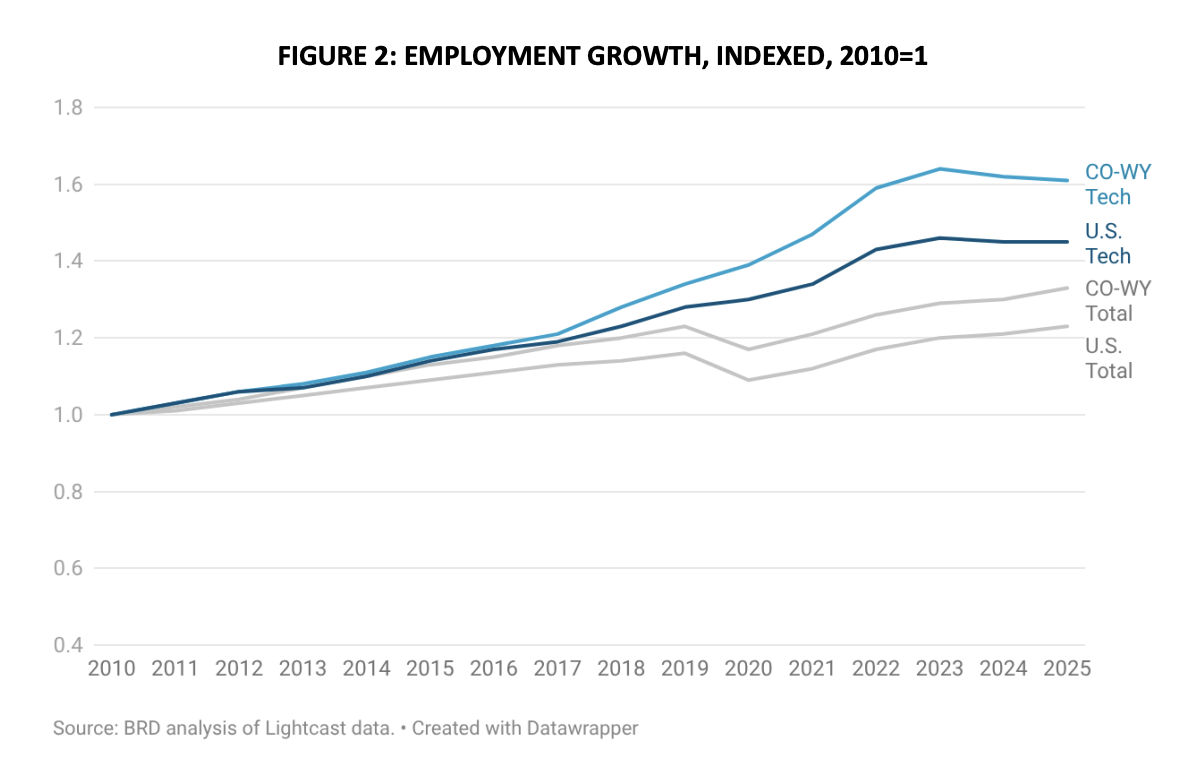
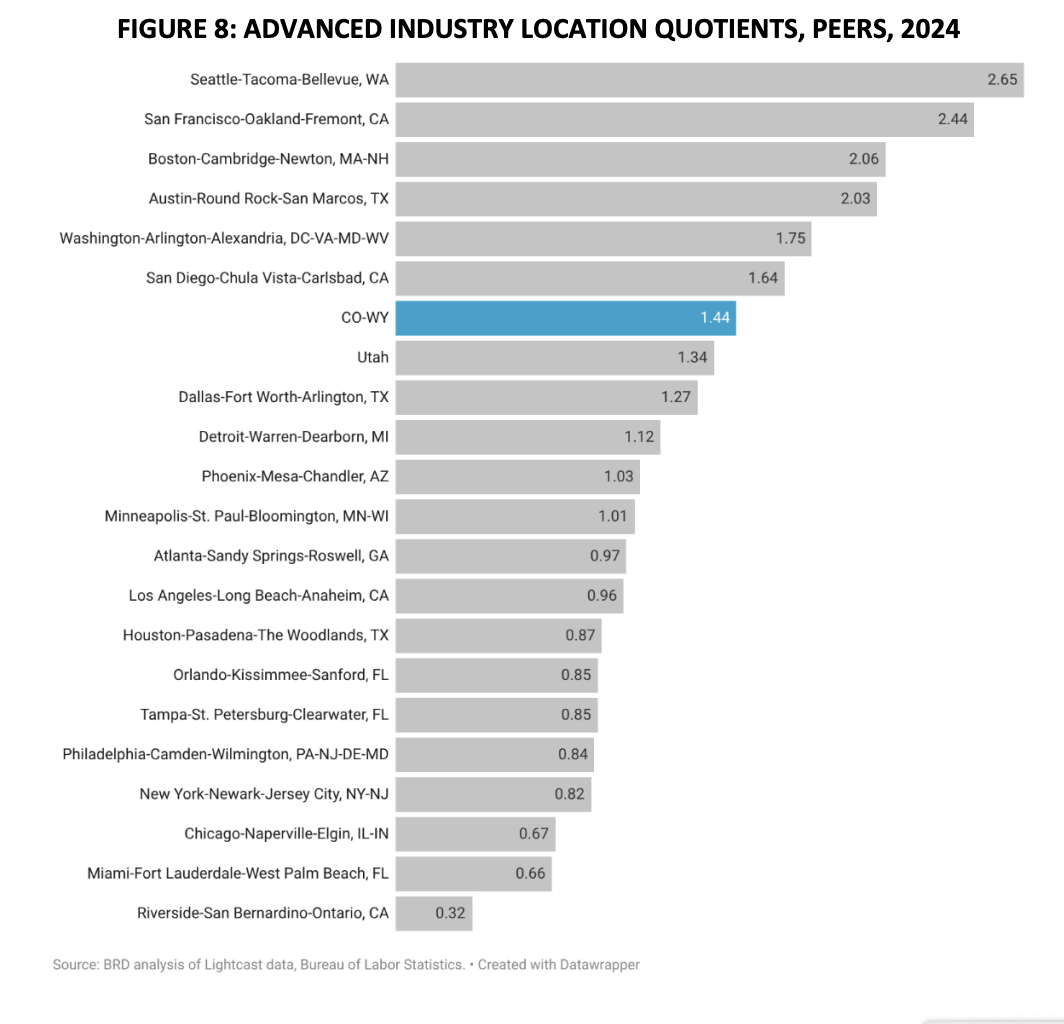
With approximately 239,000 tech jobs in 2025, the CO-WY region ranks eighth among the peer markets examined, ahead of major metros like Chicago, Atlanta, Houston, Austin, and Philadelphia. But raw employment totals only tell part of the story. The region's location quotient of 1.44 means tech employment is roughly 44% more concentrated here than in the national economy overall. Driven by strong collaboration between the private sector, universities, and federal labs, the CO-WY region has developed a level of industry specialization that stands apart from many larger and more economically diversified cities.
This concentration is being fueled by precisely the industries that ASCEND programs like ARID and SHIELD, which used advanced sensing and computation to better understand the interface between wildfires and utilities and soil health respectively, are designed to accelerate. The CO-WY tech economy is anchored by computer systems design (38% of regional tech employment), engineering and architectural services (27%), and scientific R&D (8%). Together, these sectors account for the majority of regional tech jobs and underpin key industries including aerospace, biosciences, advanced sensing, quantum technologies, and artificial intelligence. These are the employers, collaborators, and commercialization pathways for the companies in the NSF ASCEND Engine portfolio.
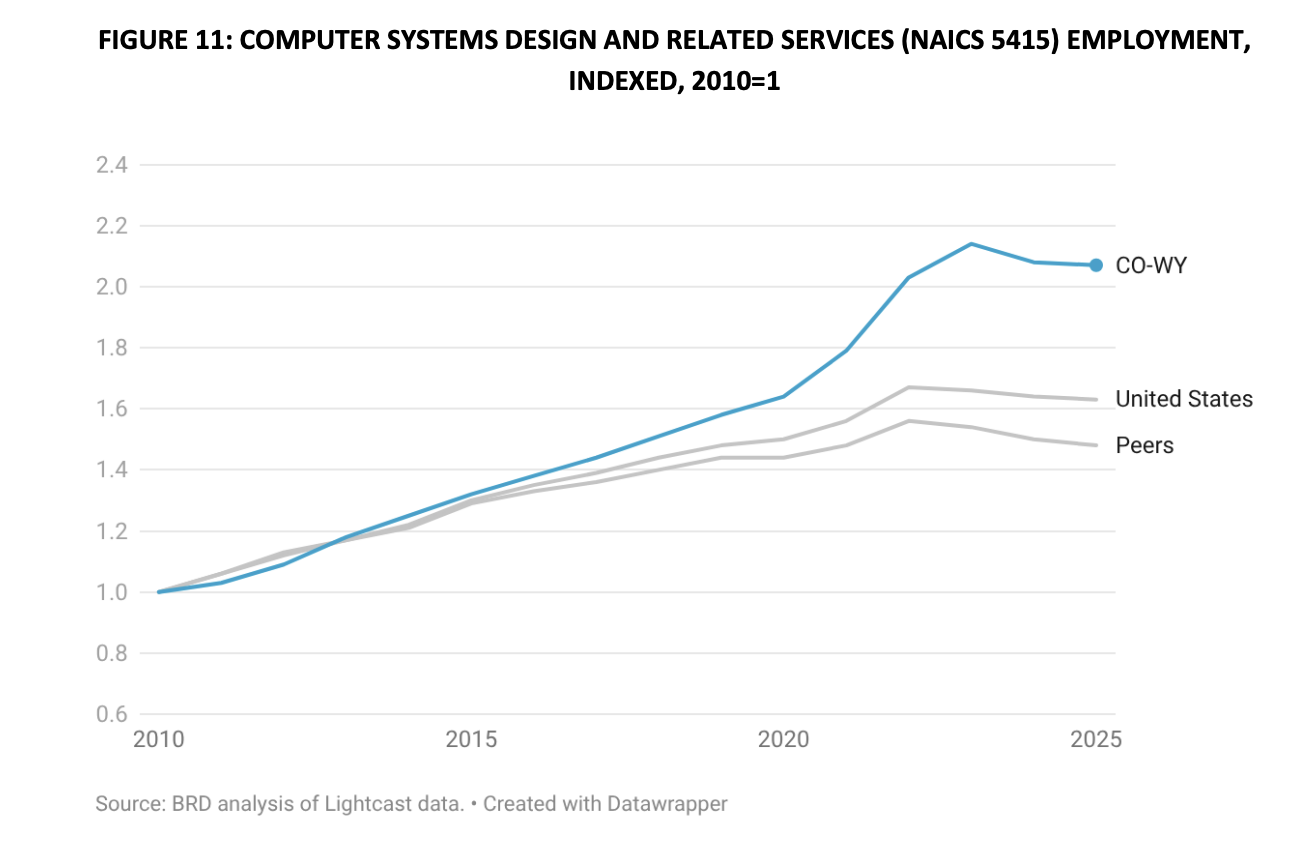
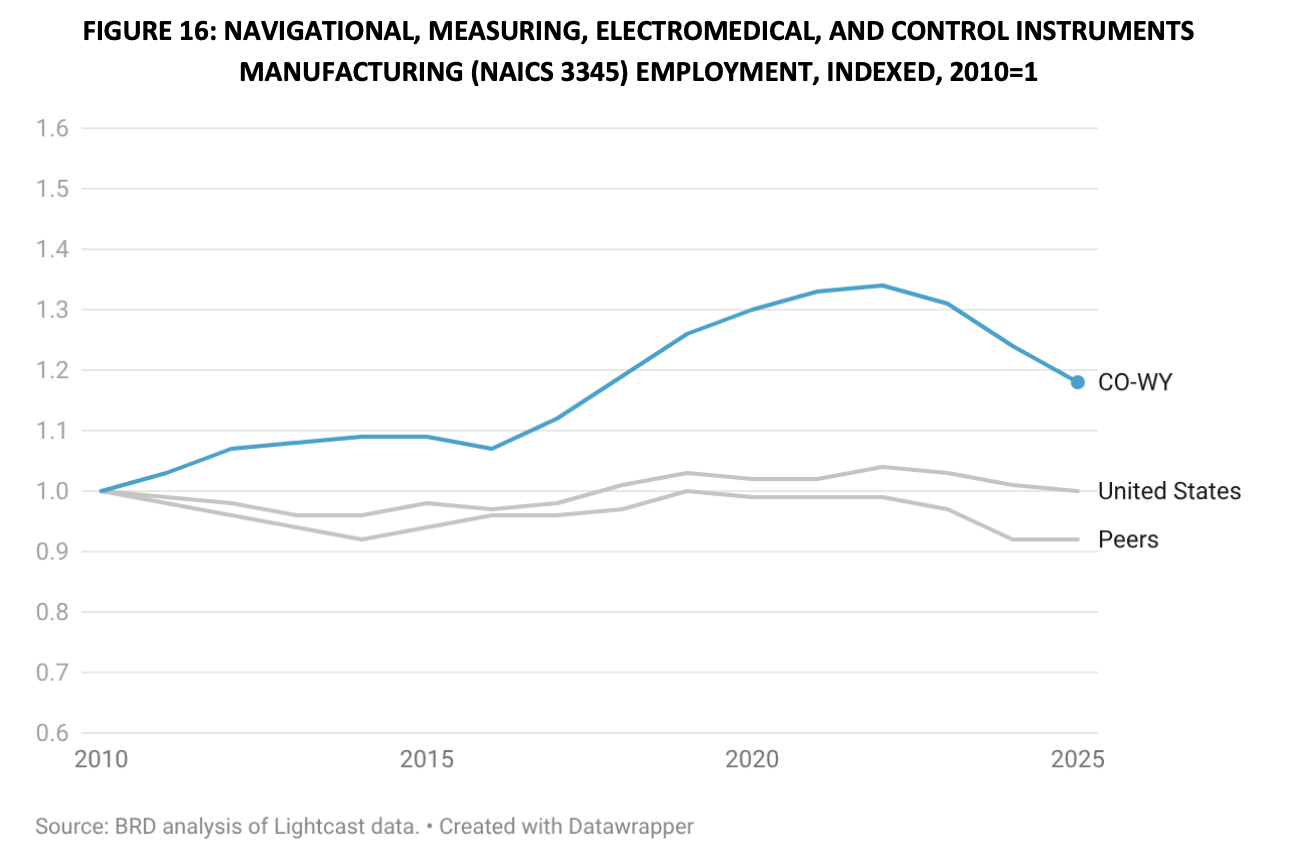
Two subsectors deserve particular attention given the NSF ASCEND Engine's focus areas in advanced computation and remote sensing. Computing infrastructure and data-related services saw CO-WY employment grow to 2.26 times its 2010 level by 2025, substantially outpacing both national and peer benchmarks and reflecting the region's growing strength in the digital backbone that supports everything from AI to environmental monitoring. Navigational, measuring, and control instruments manufacturing, which maps directly to the NSF ASCEND Engine's radar, optics, and advanced sensing focus areas, grew to 1.18 times its 2010 level in CO-WY even as national employment in that sector remained flat.
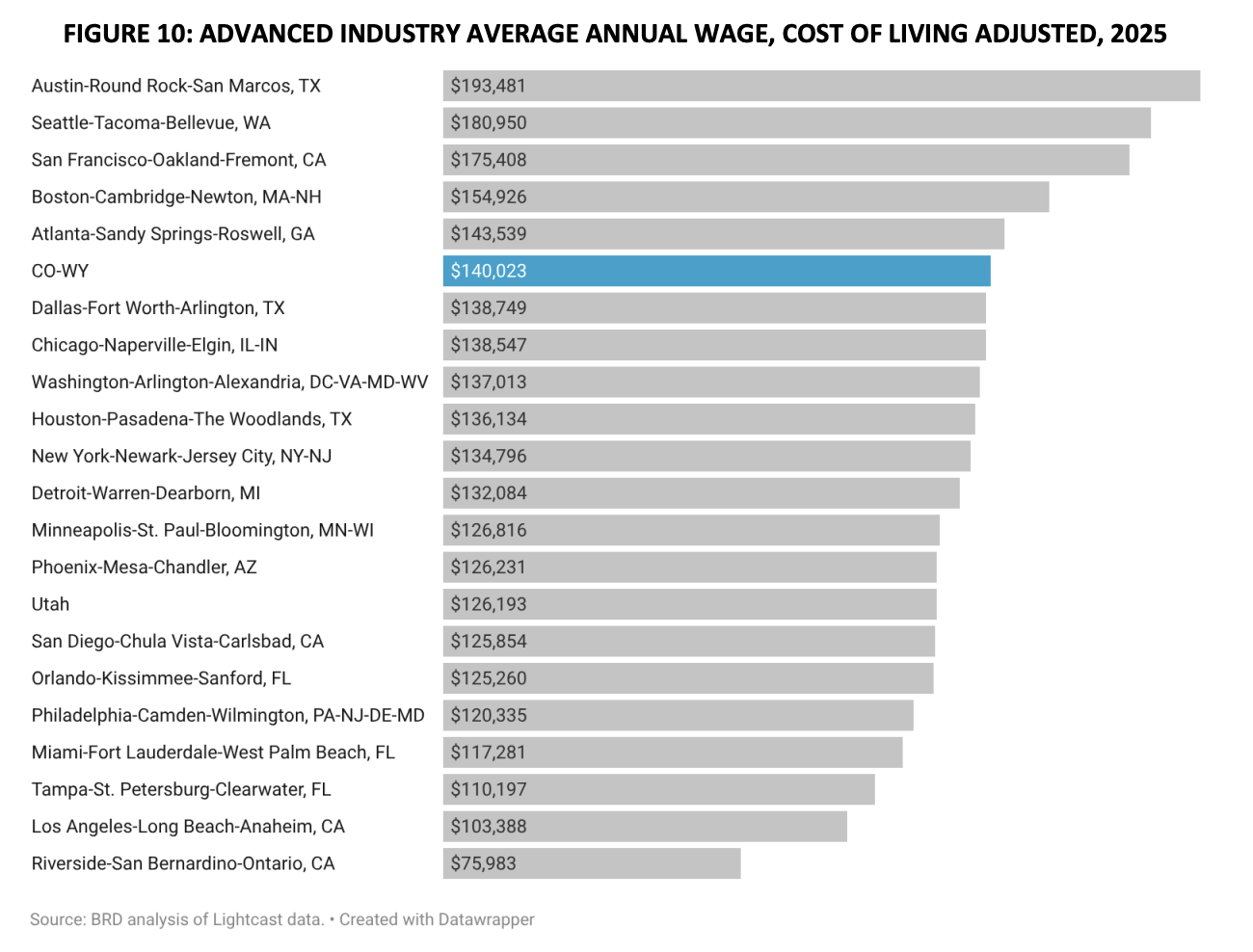
On wages, the region's average tech salary of approximately $157,300 ranks ninth among peer markets on an unadjusted basis. After accounting for cost of living, however, CO-WY climbs to sixth, offering purchasing power that rivals Dallas, Chicago, Washington D.C., and New York. For talent recruitment and retention in a competitive national market, that is a meaningful advantage further compounded by the high quality of life within the CO-WY region.
The report is candid about the challenges ahead as winner-take-most dynamics still define the U.S. technology sector, and the gap between the CO-WY region and the largest coastal hubs will not close on momentum alone. Sustained progress will require deliberate policy intervention and strategic investment, namely in the form of stronger workforce development, greater institutional collaboration, and more in-state risk capital, to positively augment the region's existing growth trajectory. That is precisely the work the NSF ASCEND Engine is designed to accomplish.
The full report is available throught the hyperlink or on the Innosphere website. For questions about the analysis or how it informs the NSF ASCEND Engine programming, contact the Innosphere Research and Evaluation team.