

The Future of Water: How Predictive Science Is Changing River Management in Colorado
A multi‑institutional collaboration is pairing novel sensors with river‑wide monitoring networks to give water managers unprecedented, real‑time insight into water quality.

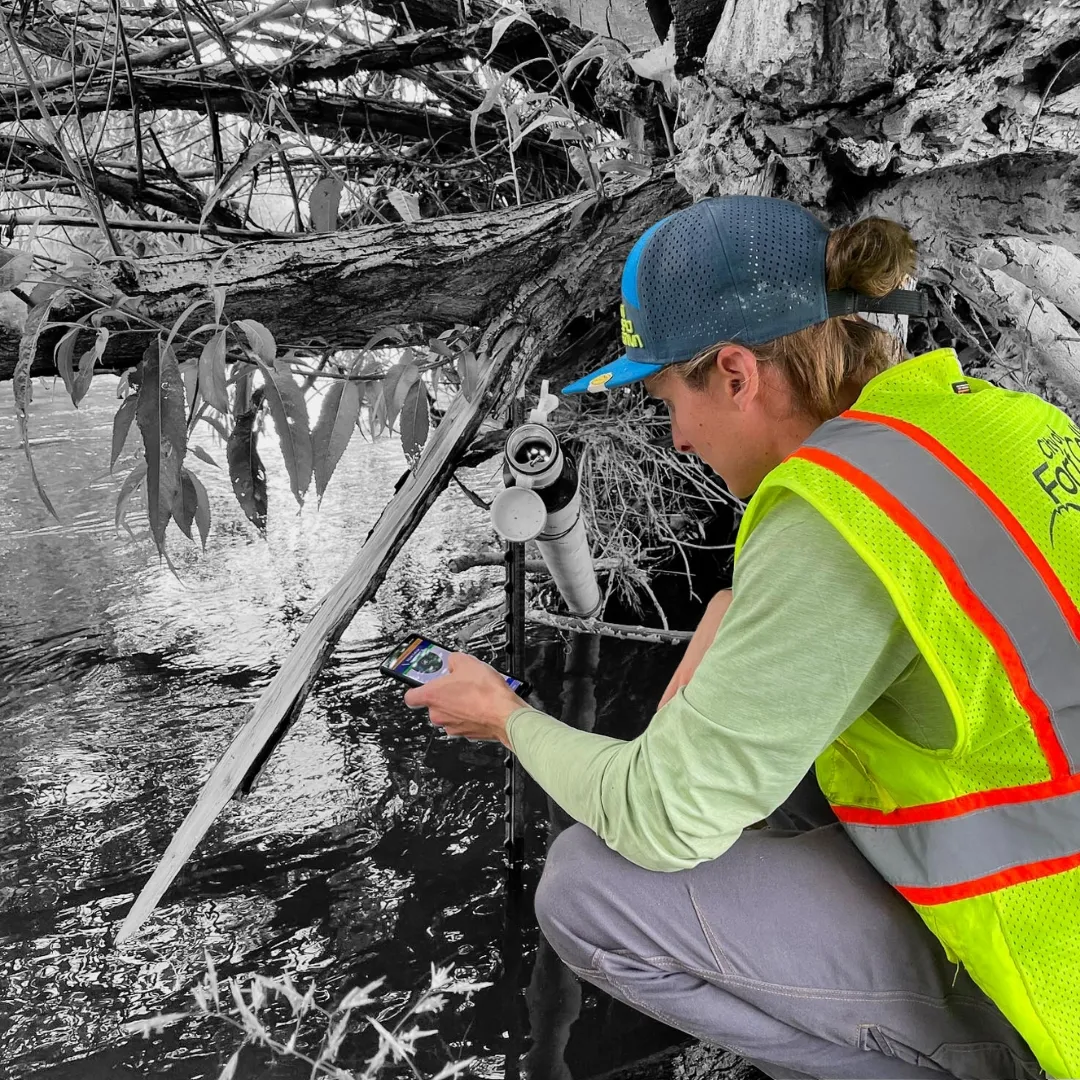




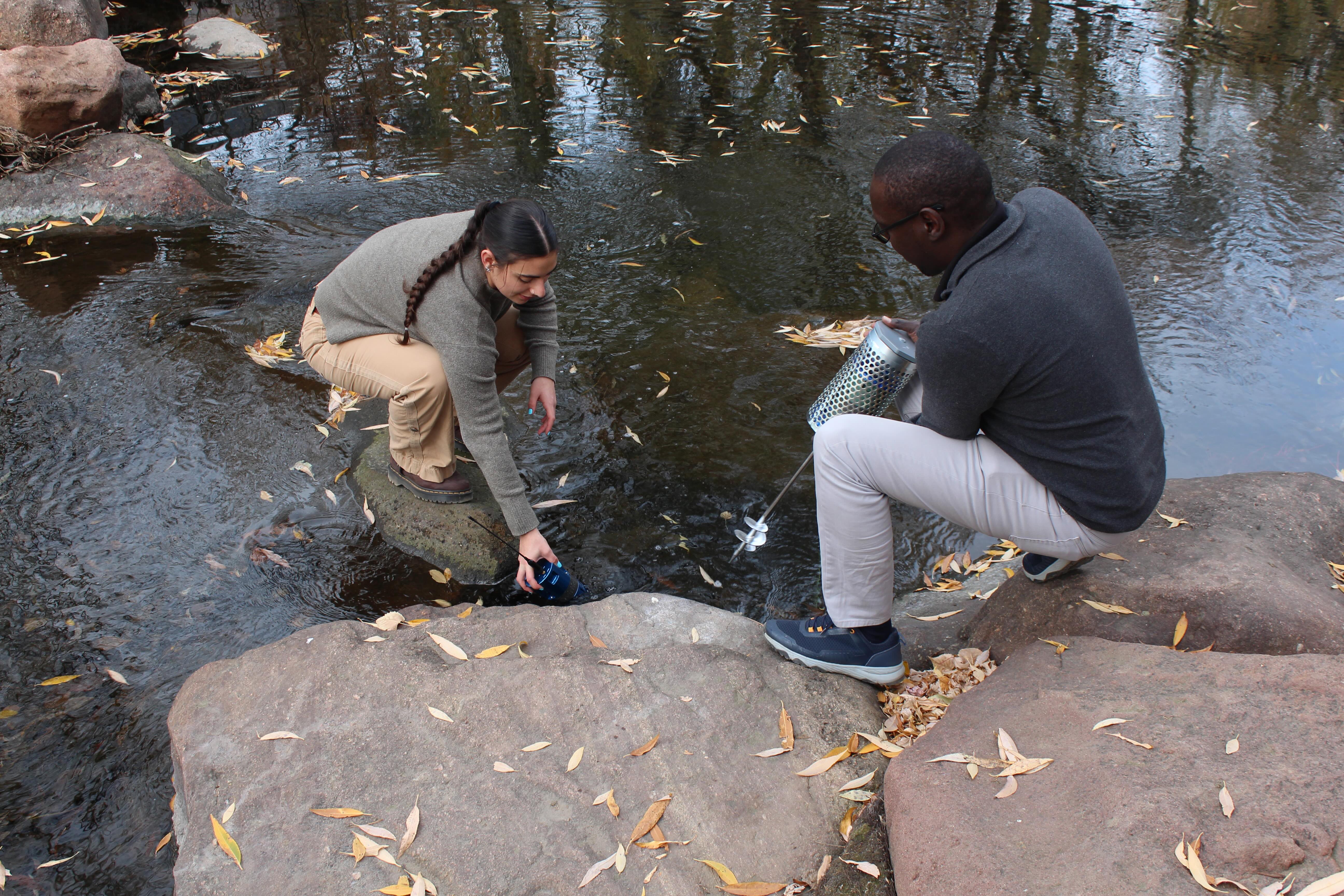
If you turn on a faucet anywhere in north-eastern Colorado, there is a good chance the water coming out is from the Cache le Poudre River. Known colloquially as ‘the Poudre,’ this river begins as Rocky Mountain snowmelt before descending 7000 feet and flowing over 125 miles before joining the South Platte River.
The Poudre is a working river, crucial for agricultural, industrial, and recreational purposes for most of Colorado’s Front Range. Its watershed covers an area the size of Rhode Island, providing water to 400,000 people and 185,000 acres of agricultural land. Keeping the river clean and functional is essential, but, as Dr. Matthew Ross from Colorado State University notes, “The need for an integrated water quality warning system has become more urgent in the past five years as catastrophic wildfires have burned the water supply basins for large parts of the western United States.”
Upstream Knowledge for Downstream Impact
Ross is an Associate Professor of Water Quality at Colorado State University, and his colleagues (Dr. Sarah Collins at the University of Wyoming, Dr. Isabella Oleksy at the University of Colorado Boulder) have spent the last six years working together to help their municipal and state partners understand threats to their respective water supplies across Colorado and Wyoming.*
With the support of the NSF-Funded ASCEND Engine in Colorado and Wyoming, Ross and his team “aim to develop a water quality warning system that empowers water suppliers in Colorado and Wyoming to make informed watershed management decisions, save money in operations of treatment plans, and reduce risk across water supplies.”
Traditional water quality management entails infrequent testing through grab samples from sites near drinking water intakes. As a result, water management decisions were slow, reactive, and made using incomplete data.
This is where the Poudre comes in. Dr. Ross and his team have built a water-quality sensor network spanning from the river’s source in the Rockies down to Interstate 25 in Colorado’s plains. This sensor network, funded by partners such as Northern Water, provides near-real-time water quality information. By integrating these data sets with supplemental data drawn from in-situ grab samples and remote-sensing datasets, they hope to build machine-learning and deep-learning models that can forecast estimates of key water quality parameters.
The Sensor Network
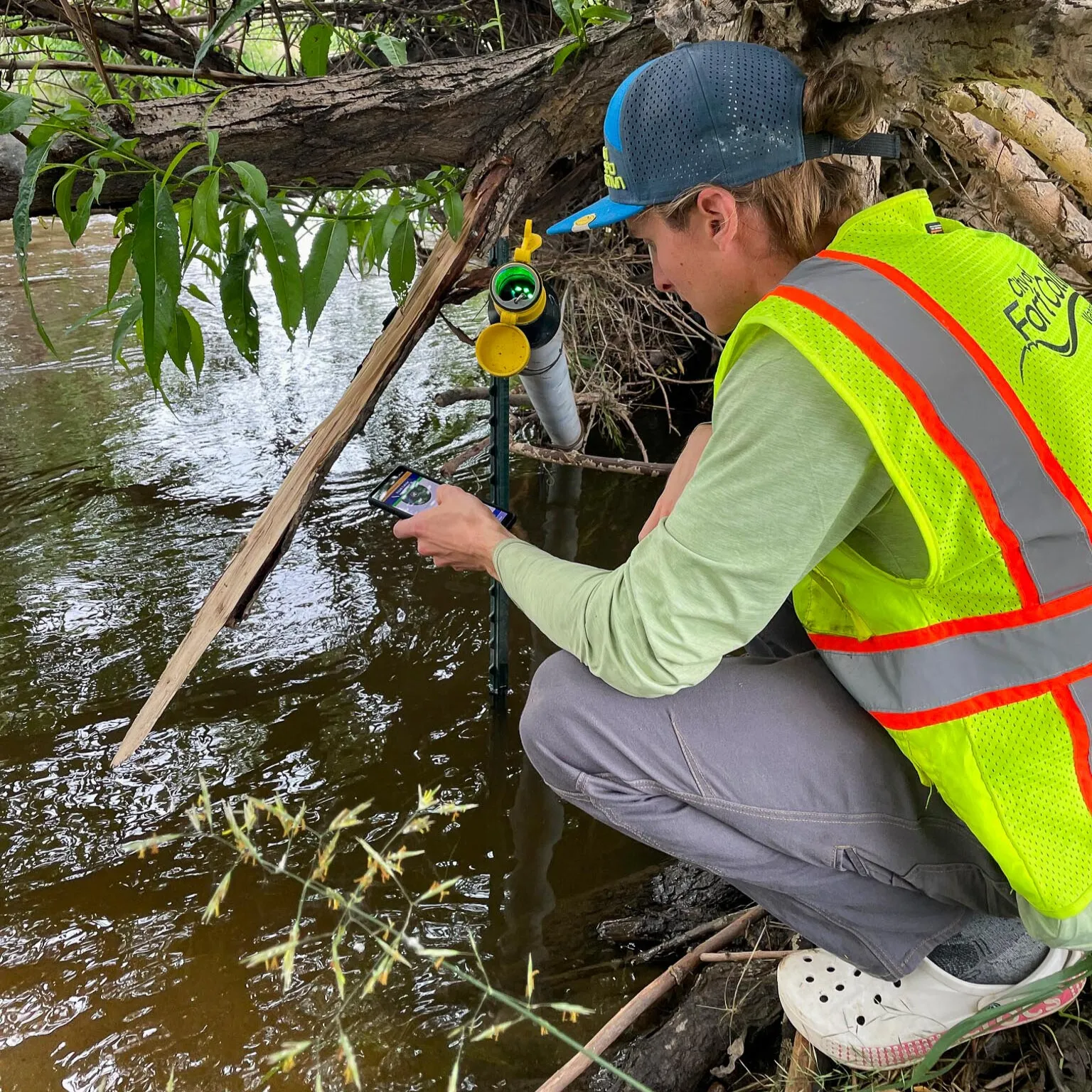
Sam Struthers, the Field Coordinator for the sensor network, explains that the system includes a telemetry device that sends data every three hours to inform models, and a multi-parameter sonde with multiple sensors measuring parameters like pH, turbidity, and chlorophyll. These sensors collect data every 15 minutes and transmit it every three hours. Alongside grab sampling, this data is used to develop a real-time decision-support system by forecasting water quality using machine learning.
“Our partners have asked us to create a system that forecasts total organic carbon (TOC), chlorophyll a—which estimates total algal abundance—and turbidity at four key sites in the Cache la Poudre system with 1-3 day forecasting lead times,” Ross says. “With Engine support, we will develop models that deliver accurate real-time data but also produce 3-day forecasts of TOC, algal biomass, and turbidity.”
The ability to predict changes in water quality, as opposed to just reacting to changes, offers a significant decision-support advantage to water managers. If water quality issues are known in advance, water managers can save money by optimizing treatment operations and planning water supply switches based on forecasted water quality.
The long-term goal: “I want to keep providing useful tools that help make the water supplies for Greeley, Thornton, and Fort Collins more robust and more sustainable.” Ross also hopes to build similar systems for other potential partners, especially in the Western United States, which face increasing water stress.
Scaling Up and Connecting Resources
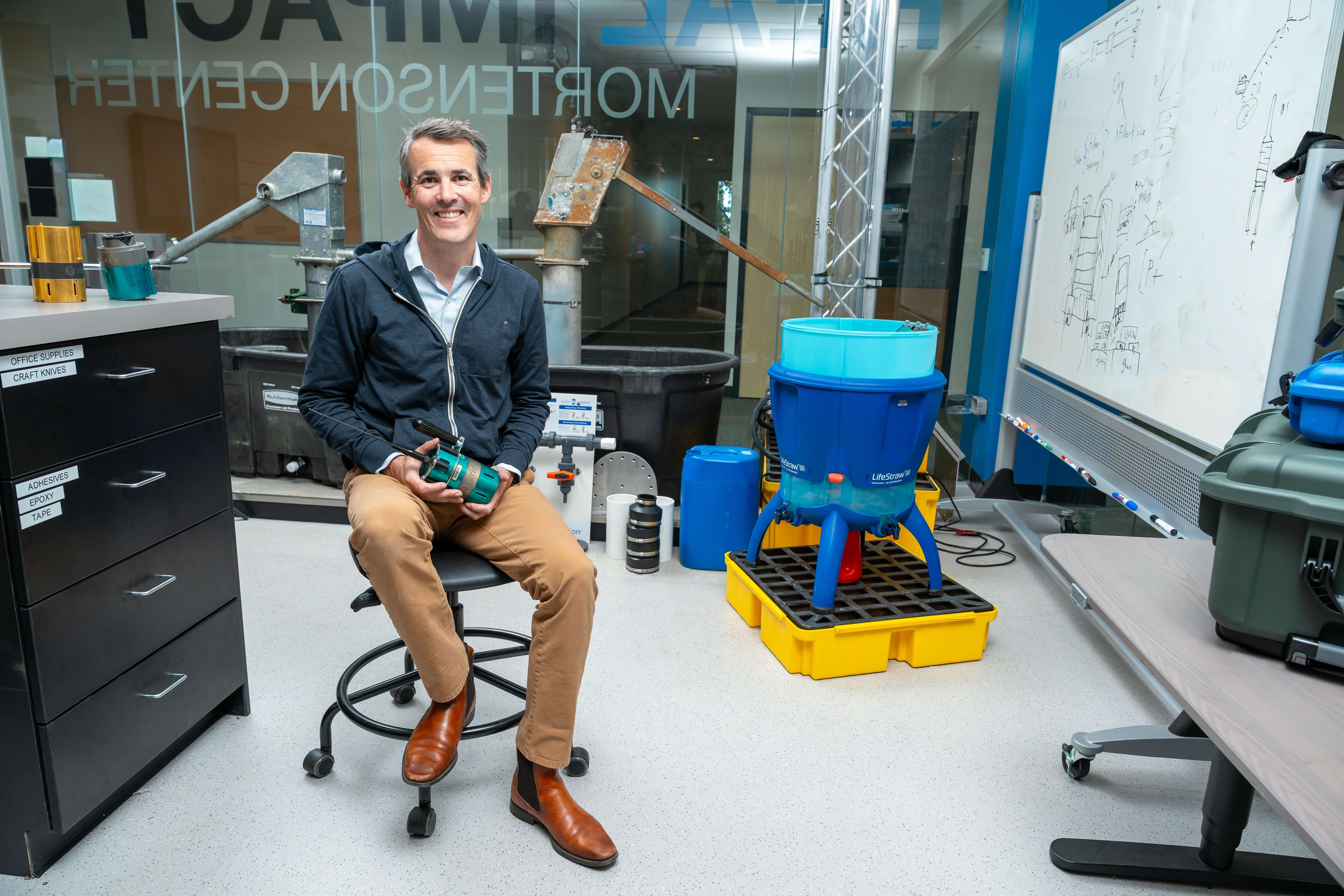
Evan Thomas started his career as an aerospace engineer at NASA, ensuring astronauts had clean drinking water. From there, his career is a list of impressive accomplishments, from running public health interventions in East Africa to founding companies to being internationally recognized with the International Water Association's Research Award in 2025. He is currently a Professor in Environmental and Aerospace Engineering at the University of Colorado Boulder and CEO of water-quality sensor company Virridy. It is through Virridy, a spin-off from the Mortenson Center in Global Engineering and Resilience that he and his team are developing and deploying a new type of water sensor called the Lume.
I get the chance to see a Lume up close when I visit Thomas’s lab in Boulder. It is small, sleek, and comes in three colors designating the sensor’s contaminant-detecting abilities. Doctoral student Whitney Knopff explains that the Lume uses specific wavelengths of light to fluoresce certain proteins and microbes. The intensity and wavelength of the fluorescence can be used to determine the type and quantity of contaminants in a water sample. Unlike traditional sensors, using tryptophan-like fluorescence enables Lume to detect and quantify previously hard-to-measure contaminants such as E. coli. It can also be manufactured at a fraction of the cost of traditional sensors, making them more accessible to researchers, community groups, and the agricultural sector.
Better Sensing Equals Better Decision Making

The Lume is designed to be used continuously and is equipped to transmit data via cellular signal. These sensors are already deployed and are undergoing validation; the sensors send information.
“We're then able to calibrate our model with ground truth samples that we take with lab enumerated methods,” explains Whitney Knopp, doctoral student in environmental engineering at CU and Environmental Engineer at Virridy
“We've been developing the Lume over the past few years, and are just now on the verge of commercialization,” Thomas says. “The NSF Ascend Engine has allowed us to invest in the manufacturing and early customer adoption of our Lume sensor.” The technology has evolved from 20 pilot units to 200 commercial units, with significant partnerships in Colorado and internationally. Sensors are currently deployed in Boulder Creek and on the Yampa River in collaboration with Denver Water.
Virridy is also working with the Colorado State Legislature and the Colorado Department of Public Health and Environment (CDPHE) to study and accelerate their technology.
According to Thomas, about a third of wastewater treatment utilities in Colorado discharge into rivers that do not meet Clean Water Act nutrient or bacterial water quality standards. With better data pre- and post-installation, built infrastructure along waterways and lakes could be replaced with green infrastructure, which is less expensive and reduces water contamination.
“One of our approved CDPHE pilots is Plum Creek Sanitation District which discharges into Chatfield Reservoir. Plum Creek is exploring watershed-scale green infrastructure solutions to meet regulatory requirements for nutrient reductions. We also have a contract with the City of Boulder regarding applying this approach for e. Coli management in Boulder Creek.”
As these projects mature, Thomas believes that Lume sensors will help develop regulator-approved green infrastructure programs to support resilient watersheds.
Towards Complex Systems Integration
Thomas’s sensor and Ross’s machine learning technology are impressive in and of themselves, but together they have the potential to revolutionize water-quality monitoring and management. “One of the benefits of having the support of the NSF ASCEND Engine is having the ability to come collaborate with Evan and spend a lot of time thinking deeply about how our projects align, how we can help each other, how our teams can be integrated,” said Ross.
The result of this collaboration is expected to be the capability to take raw readings from the Lume sensors and build-out robust and trustworthy algorithms that directly predict water quality in rivers, wells, and the reservoirs. Integrating low-cost, distributed sensing innovation within robust and trustworthy AI/ML enabled decision support tools, as we are seeing in the case of this collaboration, is the “gold standard” outcome for the ecosystem building efforts of the ASCEND Engine.
The work underway on the Poudre and across Colorado’s watersheds signals a pivotal shift from reactive to proactive management of the region’s watersheds, rivers, and reservoirs. Using cutting-edge sensors, sensor networks and forecasting tools is giving water resource managers the power of foresight and the ability to take control when water quality factors can change rapidly.
The ASCEND Engine’s support has accelerated this transformation, knitting together researchers, utilities, and policymakers into a regional effort that mirrors the interconnectedness of the water systems themselves. If these systems scale as envisioned, Colorado and Wyoming could become models for resilient water management across the American West.
*Sadly, Dr. Sarah Collins passed away from cancer in late-2025. According to those who knew here, Sarah was a truly remarkable colleague, a kind, generous friend, and an incredible mother and partner. Her work still deeply inspires the research team, and her lab at the University of Wyoming will still contribute to the final project, with her husband, Dr. William Fetzer leading the Wyoming portion.