
Clean Water Starts with Healthy Soil: How a Rocky Mountain Test Bed Could Protect Water for Millions
The SHIELD Living Laboratory will create a first-of-its-kind location for cutting-edge soil technology testing and validation.

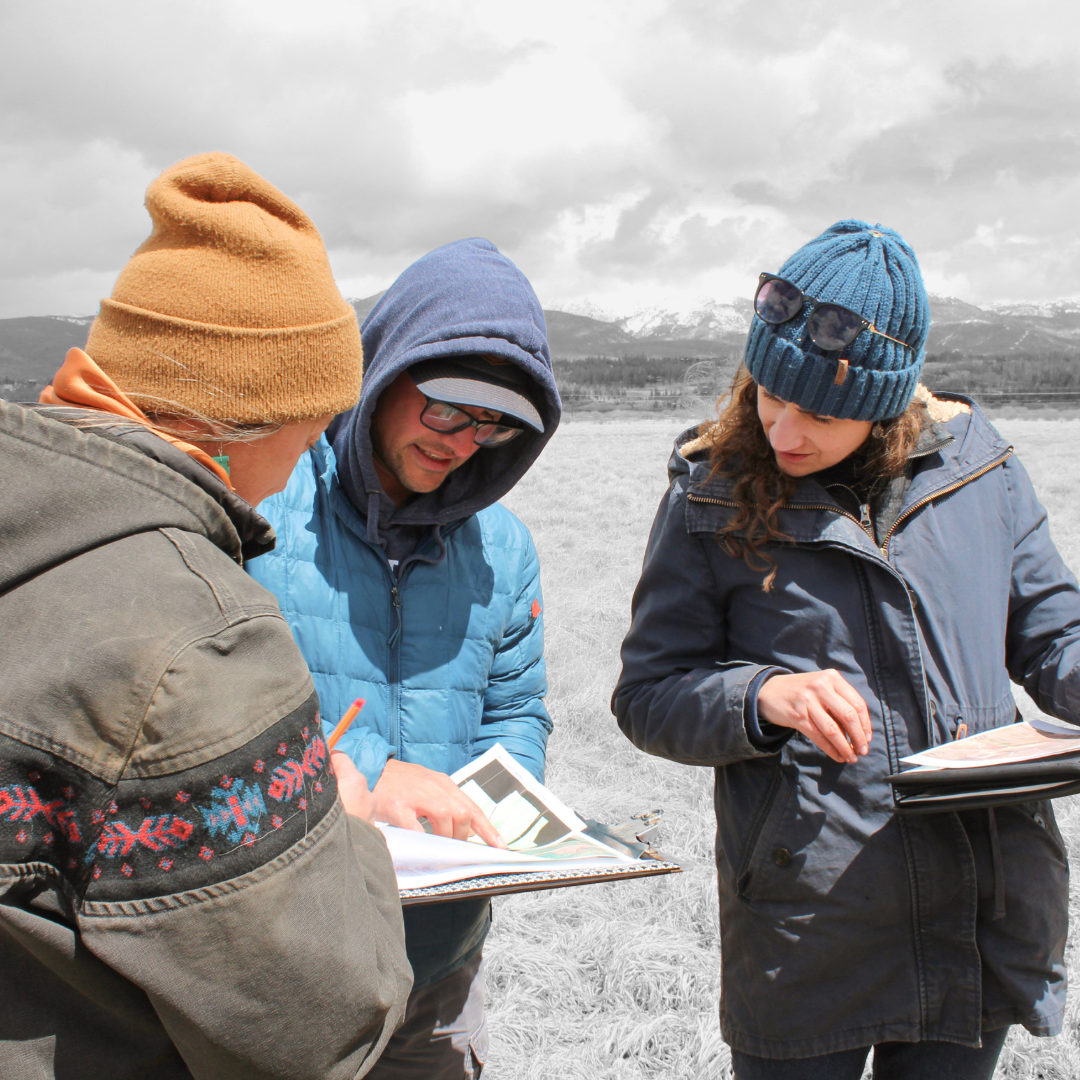


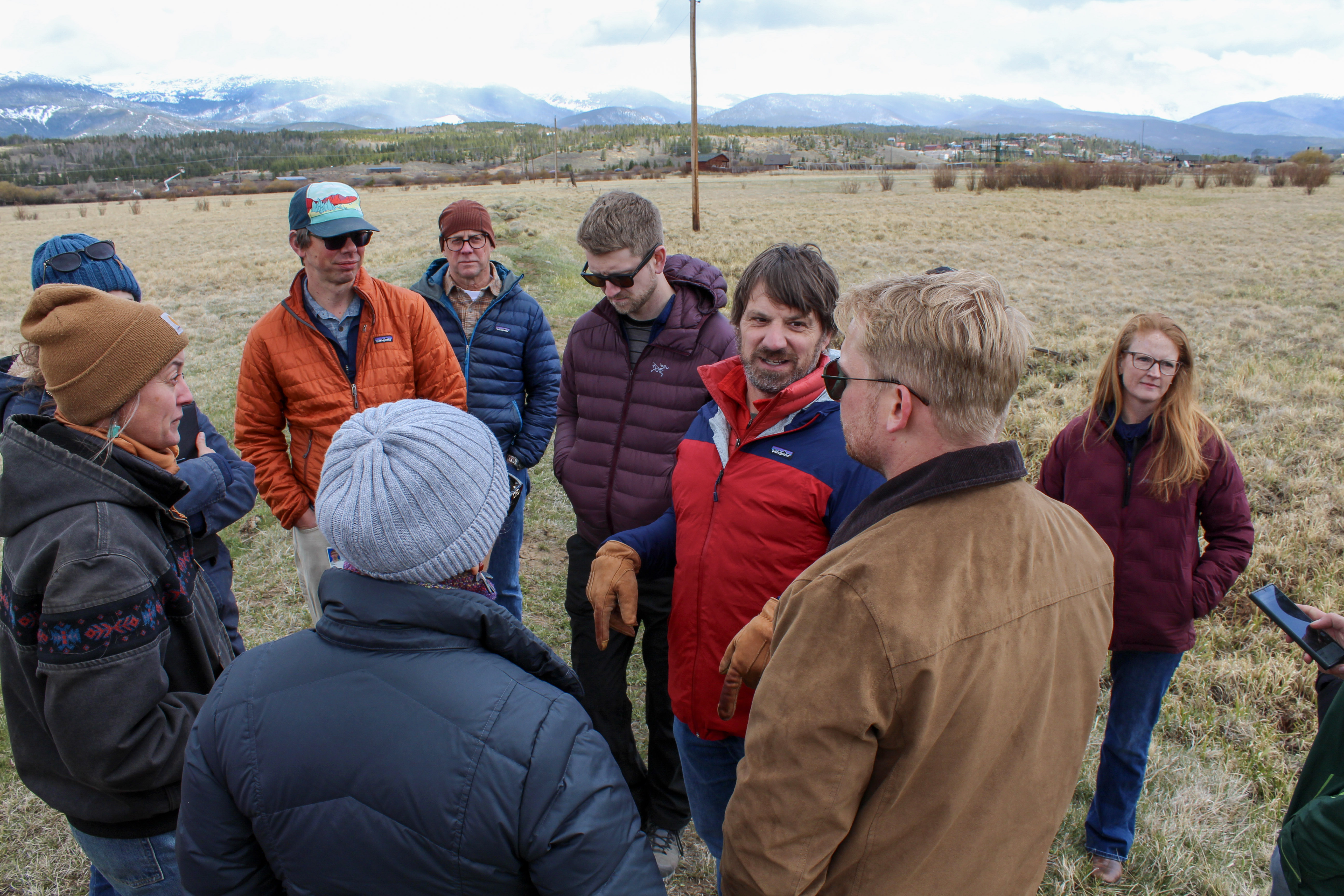
It is cold and windy as cars start pulling into the parking lot of the Fraser Valley Sports Complex. Spring comes late to Fraser, Colo., a small town tucked into the Rocky Mountains off of Interstate 70.
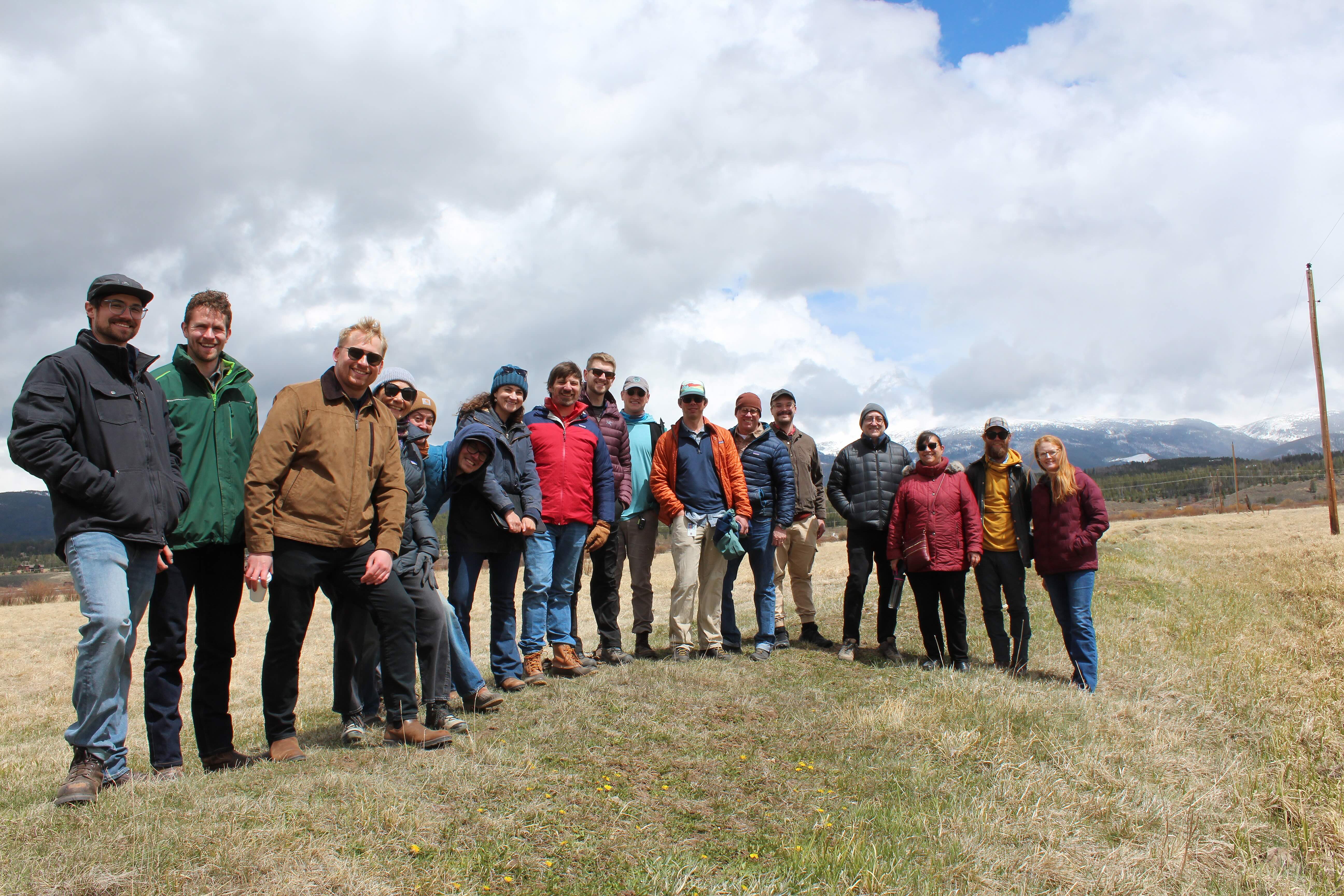
The lobby slowly fills with groups of people from Denver Water, Shell, Colorado State University, Vaisala, XPRIZE, and the NSF ASCEND Engine. Soon, there are close to 20 people lined up along walls of dusty trophies.
We are introduced to Taylor Winchell, the Engine’s primary point of contact at Denver Water. Winchell and his colleagues help to ensure that the utility can continue to provide water for 1.5 million people in an uncertain future. “We really work to make Denver Water adaptable, flexible, and to build infrastructure that's not just built for today but is built for whatever might come,” he says.
Today, we are focusing on one aspect of that preparation; Denver Water’s collaboration with the NSF ASCEND Engine to establish the SHIELD Living Laboratory. SHIELD stands for Soil Health Innovation, Evaluation, and Demonstration, and is one of three large-scale applied research programs being run by the NSF ASCEND Engine.
Water Catchment and a Cutting-Edge Testbed
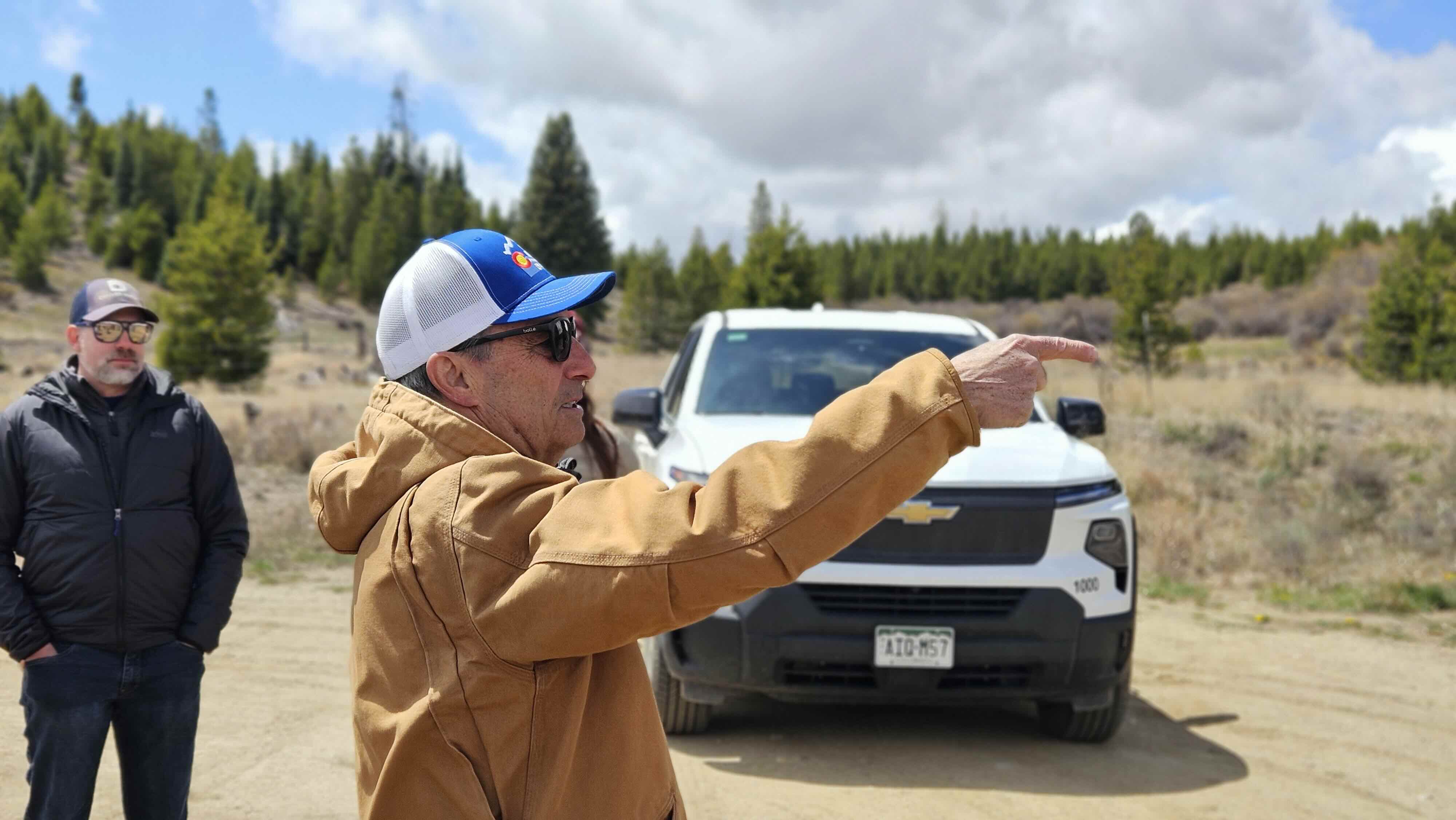
Jim Long, the Land Manager for Denver Water, notes that “today Denver Water is as much a conservation company as a utility company — one deeply involved in watershed stewardship.” Denver Water’s collection system covers an area about half the size of New Jersey (4000 square miles), and the health of that land has a direct impact on the quality of the water available.
The SHIELD Living Laboratory
The Fraser site covers 1,500 acres of forested and agricultural grazing lands and was acquired by Denver Water as part of the northern portion of its system of watersheds. The test site will bring co-located, gold-standard measurement technology from university and federal lab partners to these lands, including focused areas for technology demonstration and validation. The Fraser site will serve as a flagship “living laboratory” within a network of additional testbed sites distributed throughout Colorado and Wyoming.
The Fraser site will serve several purposes:
- Validating new soil-health technologies: The SHIELD Living Laboratory, thanks to a partnership with NEON, will be equipped with the baseline data and sensors necessary to rapidly assess the performance of new technologies.
- Ruggedization testing: New soil health technologies need to be tested in real-world environments to ensure they are rugged enough to work outside the lab. The test site experiences four distinct seasons and covers a diversity of environments (e.g. meadow, forest and ecotone) with meaningful variation in soil type, topography, and management history.
- Create decision support tools: In partnership with NVIDIA, NEON and the National Lab of the Rockies are creating a first-of-its-kind deep learning modeling framework to forecast watershed health at scale. The deep learning tools can support management practices and decision-making at large utilities like Denver Water.
- “Our idea is to create a scientifically robust distributed testbed so that we can provide a valuable service that enhances the startup world and provide also better products, better sensors, better amendments that are scientifically validated.”
- - Francesca Cotrufo, Professor at Colorado State University in the Department of Soil and Crop Sciences.
Creating Validation Benchmarks
Dr. Mike SanClements knows what it takes to turn rangeland and forests into world-class testbeds. SanClements is the Research Initiatives Lead at Battelle, which operates the National Ecological Observatory Network (NEON). NEON has 47 terrestrial and 34 freshwater aquatic sites across the continent that gather a wide range of data relevant to understanding ecological change.
In collaboration with the NSF ASCEND Engine and Denver Water, NEON will place a flux tower and other sensing tools at the site to gather baseline data. NEON infrastructure will “anchor the site so that everyone else can use and validate against our data,” SanClements says.
“We were very excited when Denver Water offered these sites to our project, because grazing land is extremely important,” explains Cotrufo, who also cofounded soil health analysis firm Cquester. “We want to test in a realistic environment and a meaningful ecosystem.”
Healthier Soils Equal Cleaner and More Abundant Water
Denver Water sees several benefits to offering the Fraser site as a location for a living laboratory.
- Access to cutting-edge technologies that can improve soil and forest management and, therefore, the quality of water
- Generation of deeper insight into how to best optimize current watershed stewardship practices at the soil-water nexus, such as the Forage to Faucets program, which engages the ranching community to support conservation with improved and sustainable resource management.
- As a public service entity, being able to contribute to innovative science and technology efforts that are part of Colorado’s identity and that will contribute to a more resilient future.
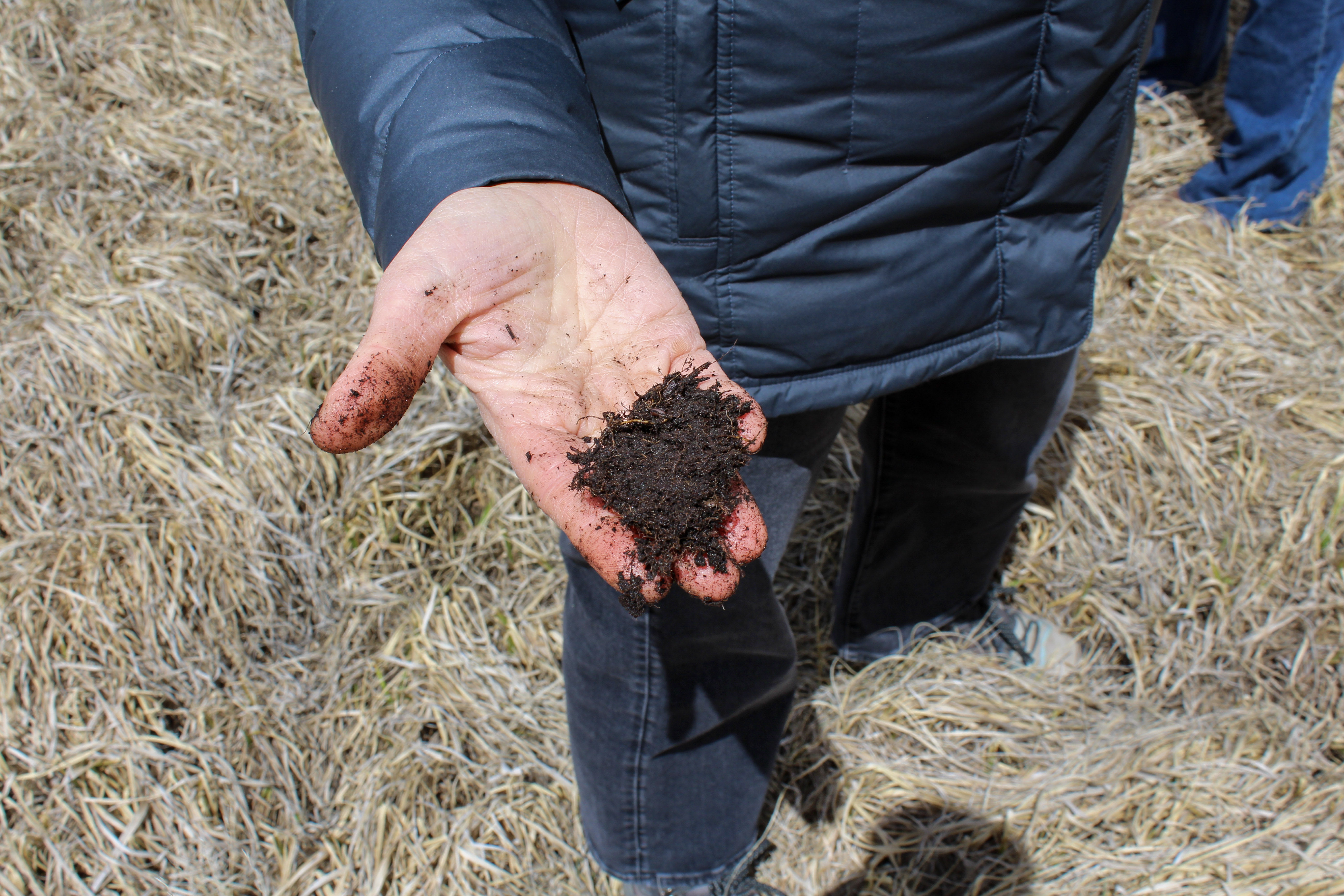
Cotrufo, an internationally recognized soil expert, reaches down to run her fingers through a fresh soil core. Her excitement about the site and what it has to offer is palpable.
“Soil is foundational to our health, our food, animals and the planet,” she says, rubbing the earth between her fingers. “Soils provide some of the most valuable services to us, from recycling and purifying water to recycling nutrients, to sustaining food production, supporting biodiversity, and giving us recreation. If the soil is degraded, it cannot perform these valuable functions.”
The Power of Partnerships in Environmental Intelligence Innovation
Having a soil testbed available to public and private institutions benefits everyone. Innovators have access to hard-to-find validation opportunities, researchers can access longitudinal data, and Denver Water gets first access to cutting-edge technology.
“For years,” Winchell tells me, “Denver Water has really benefited from being able to co-produce efforts with researchers and with companies working on new technologies. We have different ways that these new technologies can be deployed and tested, and so we saw that as something that we can bring to the table.”
Many startups in the region will benefit from having access to validated testing locations, which have traditionally been a significant barrier for innovators.
“If you're a startup or an industry partner wanting to come in and test your solution,” says Sam Malloy, R&D Director at the NSF ASCEND Engine, “you have a variety of best-in-class gold standard measurements to compare against, and that's really unique environment for startups.”
One such company is PAGE Technologies, whose CEO, Elliot Strand, is at the test site today. PAGE Technologies develops low-cost and easy-to-use soil sensors that provide farmers with real-time soil data. The sensors are currently at the stage where they are ready to be validated and tested for their endurance to real-world environments. “This is a huge validation step for us,” notes Strand.
Cquester Analytics is another Colorado startup that will play a key role at the Fraser site, serving as an in situ testing and validation partner alongside NEON. Started as a spinout from Colorado State University, Cquester was established to meet a growing industry demand for better soil testing. Leveraging a grant from the NSF ASCEND Engine, the company has developed novel techniques that significantly reduce the cost of scientific-grade soil health measurement. Supporting testing and validation through the SHIELD program will help Cquester scale these new techniques to reach a broader market.
The XPRIZE
The Fraser test site is a leading candidate to host a series of soil monitoring technology prize competitions in partnership with XPRIZE. The XPRIZE is a nonprofit organization that runs global competitions to incentivize innovation that solves global challenges. The competition, which challenges innovators to develop solutions that are both scalable and measurable, has accelerated technological breakthroughs in space, health, AI, education, food security, and more.
The SHIELD-anchored XPRIZE will focus on developing technologies to assess ecosystem health in real-time. “The purpose of the competition,” says David Babson, Executive Vice President for Energy, Climate, and Nature with XPRIZE, “is to provide a platform for innovators to demonstrate their technologies, and by doing so, de-risk the necessary investments into these technologies so they can be connected to markets and scaled for impact.”
Hosting an XPRIZE puts the NSF ASCEND Engine and Denver Water in elite company. To date, there have been thirty XPRIZE competitions with awards totaling $519 million that have generated $31 billion in social and economic benefits.
“Prize competitions can be great when you have extremely difficult questions like measuring soil health at scale,” said Malloy, who led the effort to get XPRIZE involved with the SHIELD program. “With a prize, we can set an ambitious goal and invite a diversity of approaches to come together led by different teams trying different things all competing against each other. We think this is a way to accelerate lots of solutions at scale”
Babson agrees, “We view the XPRIZE competition as a bridge between the academic research that’s being supported through this initiative as a means to translate those technologies to market for impact.”
Conclusion
What's taking shape at Fraser is more than a testbed. It's a model for how water utilities, researchers, startups, and global organizations can work together to get ahead of a problem before it becomes a crisis.
The soil beneath these 1,500 acres connects back to the water being served to 1.5 million people—and for the first time, the tools to understand and protect that connection are being built in one place.
The XPRIZE will bring global innovators to a Colorado mountain town. NEON will anchor the site with world-class data. Startups like PAGE Technologies and Cquester Analytics will stress-test technologies that could eventually reshape how farms, ranches and utilities manage agricultural land and natural resources across the West. And Denver Water will have something it's never had before: a continuous, real-time picture of a watershed vital to its operations.
There are also significant benefits to the public. Primarily, with more information Denver Water will be able to ensure that those relying on their services will have continued access to safe and clean drinking water long into the future. A secondary benefit will be the economic development that comes with this site, and several other planned locations, that will support startups and technological innovation across the region. And this is just the beginning.
"My hope for this site is to see it continue to grow," SanClements says, "to really become that living lab where we're testing new ideas, new sensors, new technologies across things like wildfire and soil health, all in one place — and allowing that cross-pollination of technology and people."
The consensus among the group is that we are only beginning to tap into the site’s potential. If the quality of water starts in the soil, then what is learned here in Fraser may matter far beyond the 1.5 million people who turn on a tap downstream.